Questions to Ask Your Korean Clinic When Choosing Vision Correction
Why Asking the Right Questions Matters
Traveling to Korea for vision correction is exciting — world-class surgeons, high-end technology, and often lower costs than in Western countries.
But every patient’s eyes are different, and understanding the details before committing to surgery is key.
Here’s a checklist of smart questions to ask your Korean eye clinic before booking LASIK, SMILE, or ICL surgery.
1. What Procedure Do You Recommend for My Eyes — and Why?
Ask your clinic which procedure fits your eye condition best and why they recommend it over others.
✅ LASIK – great for normal corneas and moderate myopia.
✅ SMILE – ideal for dry-eye patients or athletes who want flap-free recovery.
✅ ICL – best for high myopia, thin corneas, or reversible options.
A reputable clinic should explain the pros, cons, and long-term outcomes of each — not just push the most expensive choice.
2. Which Laser or Lens Technology Will You Use?
Technology makes a huge difference in precision and comfort. Ask:
- What laser model will be used (e.g., ZEISS VisuMax 800, Schwind Amaris, Alcon WaveLight EX500)?
- For ICL, what lens type will be implanted — EVO+ ICL, Toric ICL, or Eyecryl Phakic Lens?
- How old is the machine, and is it regularly serviced or upgraded?
Clinics in Gangnam and Apgujeong often use the latest European or U.S. laser platforms, but it’s worth confirming.
3. How Many Procedures Has the Surgeon Performed?
Skill and experience matter.
Ask directly:
- How many LASIK/SMILE/ICL surgeries has your surgeon performed?
- How many are done per year?
- Is the same surgeon performing both your consultation and surgery?
Look for clinics with surgeons who have performed 10,000+ successful cases — a common benchmark among Korea’s top ophthalmologists.
4. What Is the Total Cost — and What’s Included?
Ask for a written breakdown before you pay:
- Does the quote include both eyes?
- Are pre-operative tests and medications included?
- What about follow-up visits and enhancement fees if you need a touch-up?
- Are there any translation or coordination fees for foreign patients?
Typical ranges in Seoul (2025):
- LASIK: ₩1.5–2.5 million KRW
- SMILE: ₩2.8–4.5 million KRW
- ICL: ₩5–8 million KRW
Be wary of “too-good-to-be-true” discounts that may exclude follow-up care.
5. How Long Should I Stay in Korea After Surgery?
Every surgery type has a different post-op schedule:
- LASIK/SMILE: Stay 2–3 days for consultation, surgery, and next-day check-up.
- ICL: Stay 4–5 days for pressure checks and lens stability review.
Ask if your surgeon offers online follow-ups after you fly home. Many Seoul clinics now use KakaoTalk or WhatsApp for post-op support.
6. What Are the Risks and Complications — and How Do You Handle Them?
A trustworthy clinic will discuss not only success rates but also possible risks:
- Dry eyes or glare (LASIK/SMILE)
- Lens vault or pressure changes (ICL)
- Infection or under-correction (rare but possible)
Ask:
- How often do complications occur at your clinic?
- How are they treated if something goes wrong after I return home?
7. How Will You Follow Up Once I Return Home?
Since many foreign patients fly back within a week, confirm your post-care plan:
- Do they provide a written surgery report for your local doctor?
- Are follow-ups via video call or email included?
- What if I need a touch-up later — can I come back under warranty or at a discount?
8. What Is Your Clinic’s Accreditation or Certification?
Reputable clinics for international patients are registered under:
- The Korean Ministry of Health and Welfare’s Foreign Patient Attraction Program.
- Local government medical tourism portals (e.g., Gangnam Medical Tour Center).
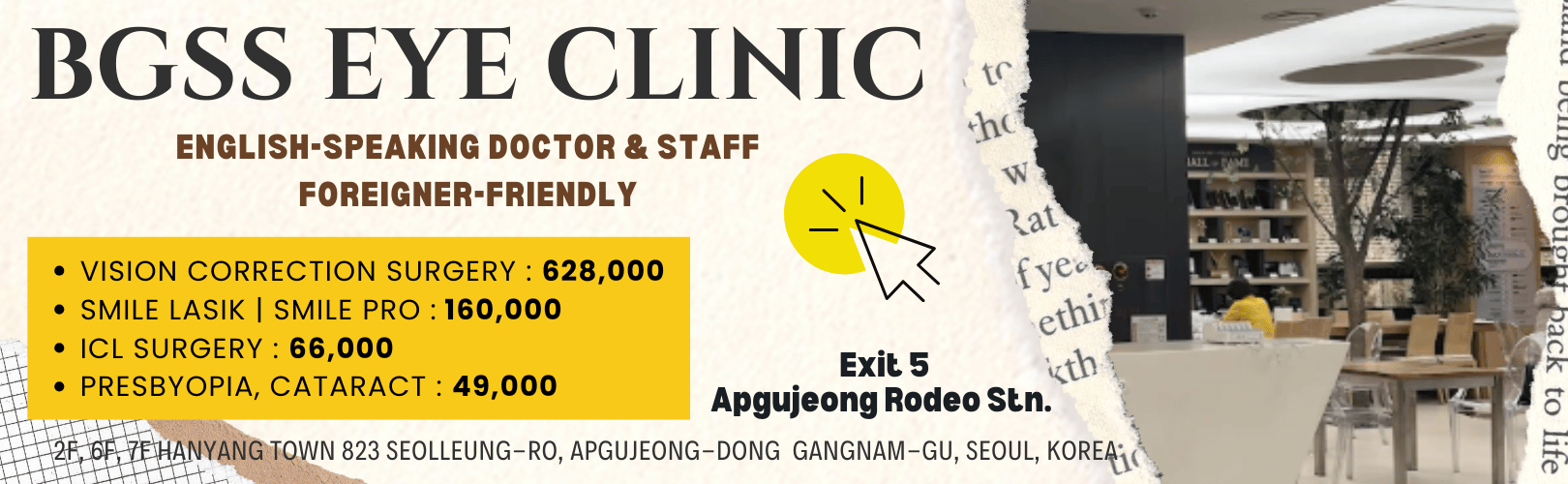
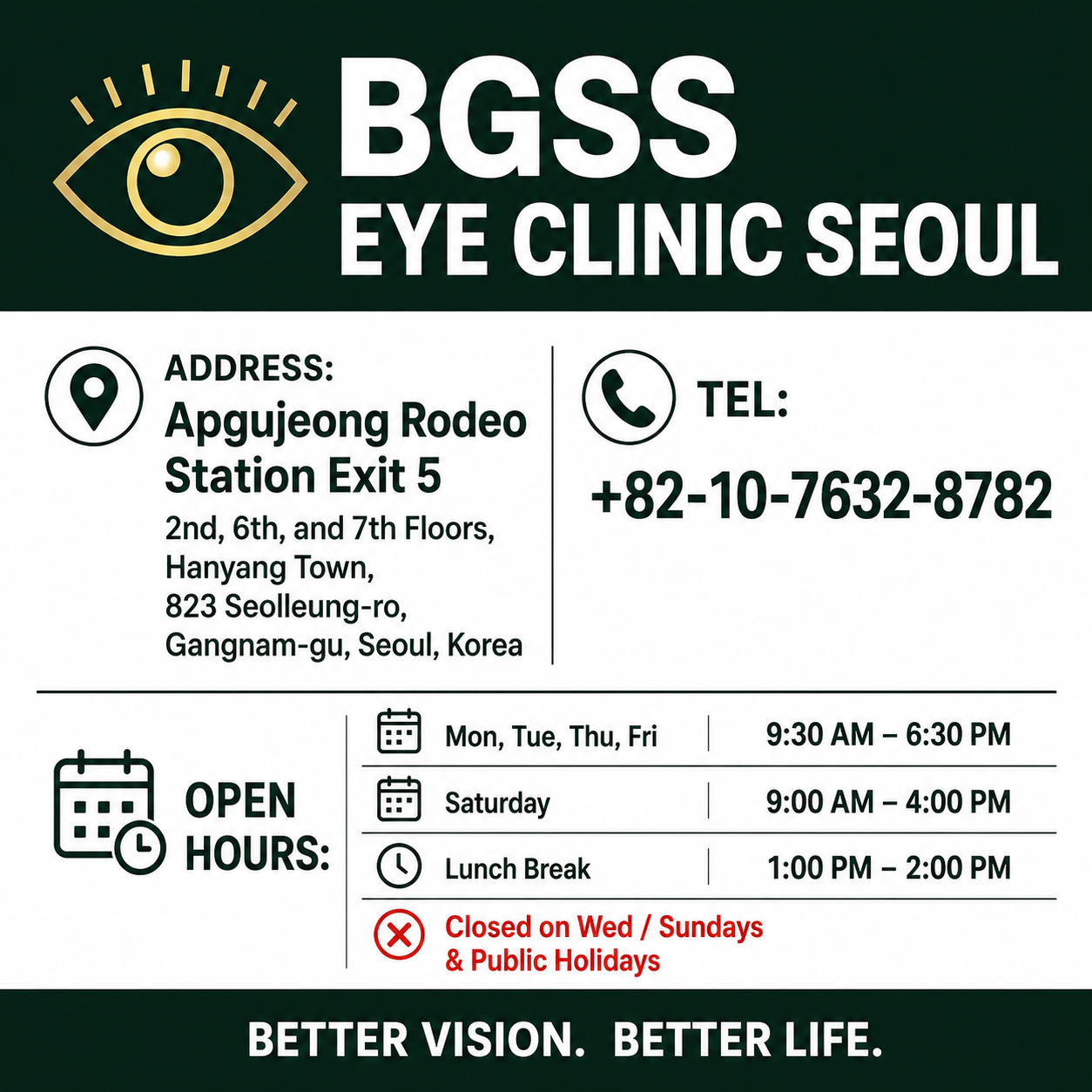
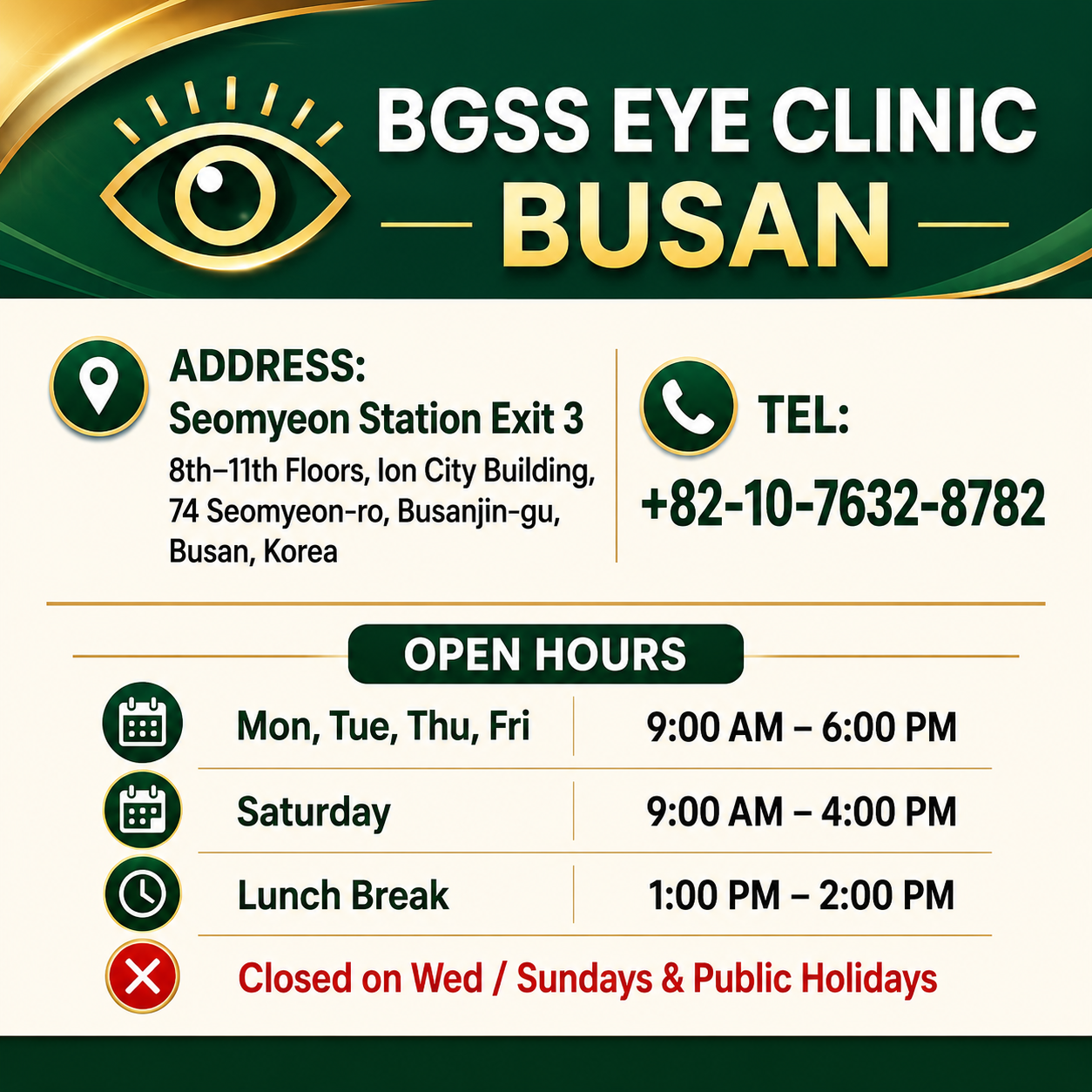
Ask to see certification or a registration number. Clinics like BGSS, B&VIIT, and GS Eye Clinic proudly display this.
9. How Do You Handle English Translation and Consent Forms?
Make sure your consent forms and after-care instructions are available in English (or your language).
Ask if there’s an English-speaking coordinator present during:
- Pre-surgery exams
- Consent signing
- Post-surgery briefings
10. What Is Your Enhancement or Refund Policy?
In rare cases, you might need an enhancement or have residual refractive error. Ask:
- Is there a free enhancement period (e.g., within 12 months)?
- Are there refund options if surgery is canceled due to ineligibility?
Transparency in this area is a strong sign of a patient-first clinic.
Final Thoughts
Choosing the right vision correction in Korea isn’t just about cost — it’s about trust, clarity, and support.
By asking these 10 questions, you’ll know exactly what you’re getting, how much you’re paying, and how your eyes will be cared for before and after surgery.
When you leave Seoul seeing clearly — and confidently — you’ll know you made the right choice.
Call-to-Action
👁️ Ready to start your vision journey in Seoul?
Use this checklist when contacting clinics like BGSS, B&VIIT, GS Eye Clinic, Apgujeong Eye Clinic, or Gangnam Smile Eye Clinic — and choose the one that makes you feel most confident about your care.
You might also like